
Albertans are paying attention to electoral boundary changes and uncomfortable with what they see
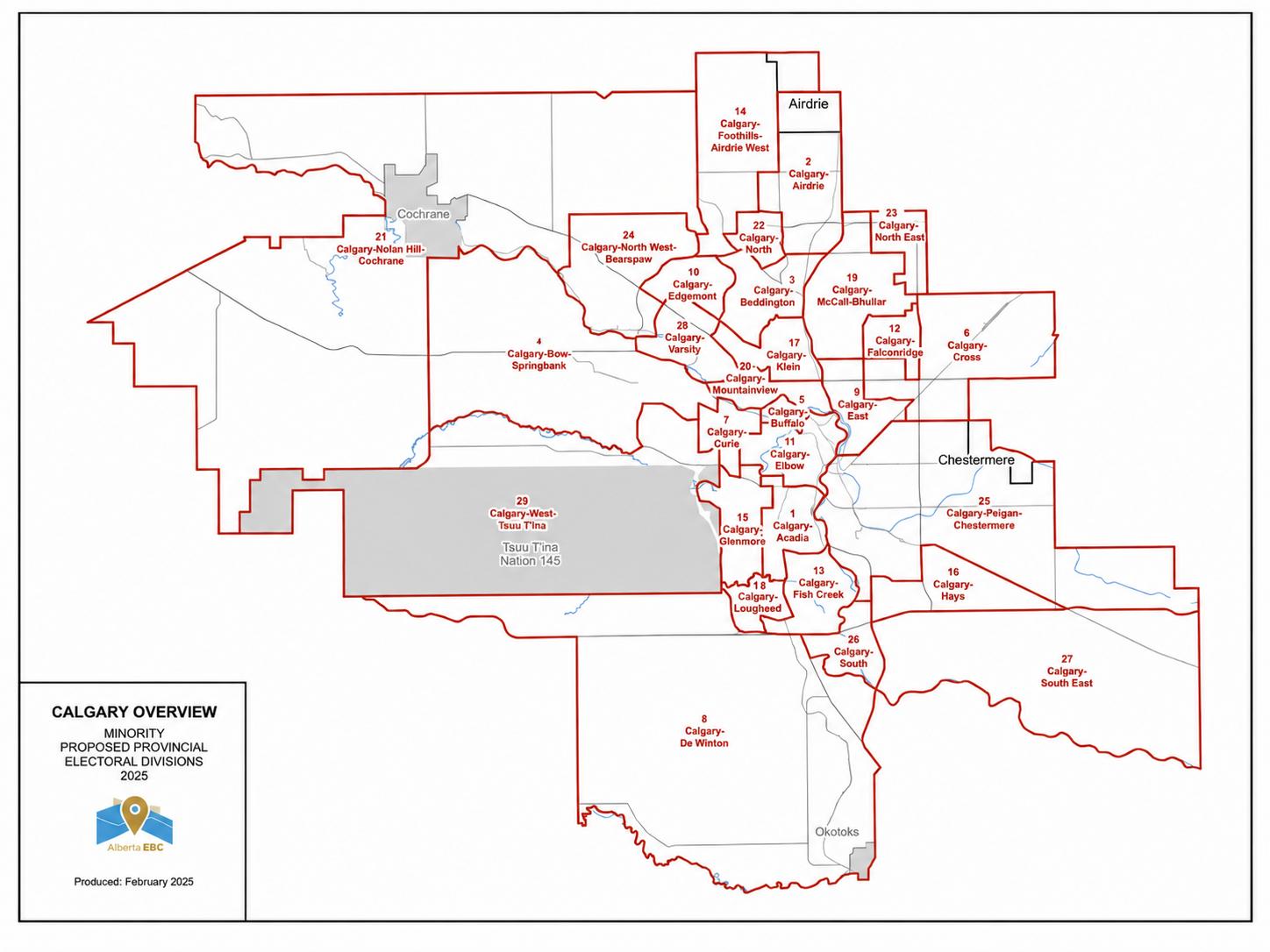
An map of proposed “hybrid” ridings for Calgary and surrounding areas, taken from the “minority report” of the Alberta Electoral Boundaries Commission.
Electoral boundary changes usually come and go in Canada without much fanfare.
The process is always important but typically mundane: population shifts are analyzed by an independent commission, which then submits a data-heavy report to government, which then duly legislates the recommendations.
Not so in Alberta in 2026.
The latest process has been unusual in many ways. For starters, the commission originally tasked with redrawing Alberta’s constituencies to account for the province’s recent population growth didn’t submit one report but two: a “majority report” backed by three of the commission’s five members, along with a “minority report” backed by the other two.
The minority report was heavily criticized by the majority of the commission, in particular for the “highly unusual” boundaries it proposed, including “hybrid” ridings that blend urban and rural areas — with “bits and pieces of various municipalities and rural areas patched together without rhyme or reason.” The majority report, issued in March, went on to say some aspects of the minority’s proposal were likely unconstitutional.
Then in April, the UCP government announced it was rejecting the boundary commission report altogether. Instead, it would strike a committee of elected officials to come up with a new electoral map. Another highly unusual move.
All this made me curious: How much are Albertans paying attention to this process? The answer: Quite a lot.
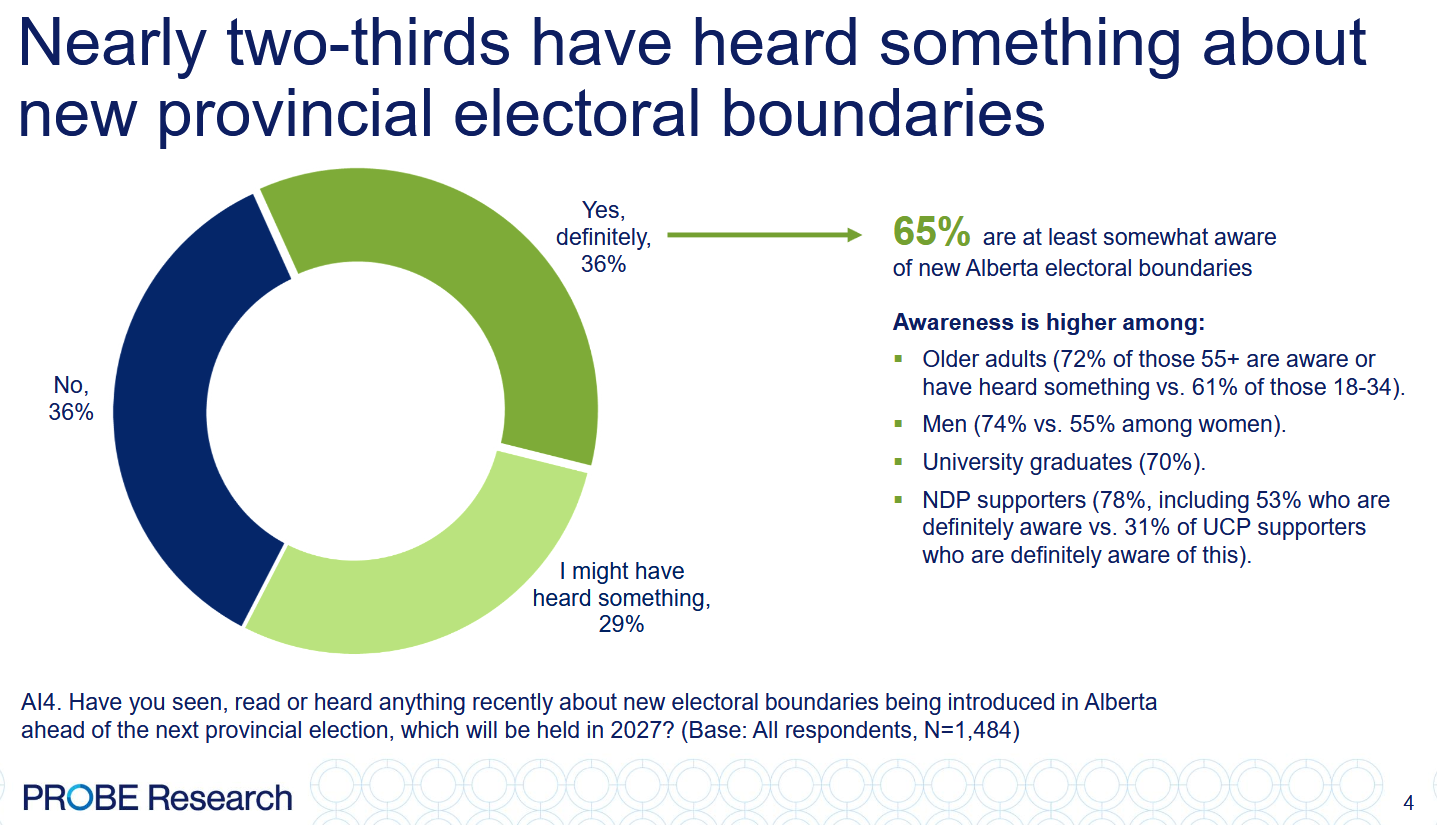
I worked with my partners at Probe Research to design a series of questions on issue, starting with a simple awarness test.
We asked: Have you seen, read or heard anything recently about new electoral boundaries being introduced in Alberta ahead of the next provincial election, which will be held in 2027?
Roughly two-thirds of Albertans say they’re at least somewhat aware of the process, which is a higher proportion than I would suspect were typically paying attention to electoral boundary changes in the past.
(I don’t have data to back that up, in large part because electoral boundary changes have been such a routine thing that I don’t think it would t have occurred to many pollsters to have asked about it previously. But if there is some data out there that you’re aware of, please let me know!)
In addition the awareness question, we also asked Albertans about their opinions on the process.
And, for the most part, they’re not too happy about it.
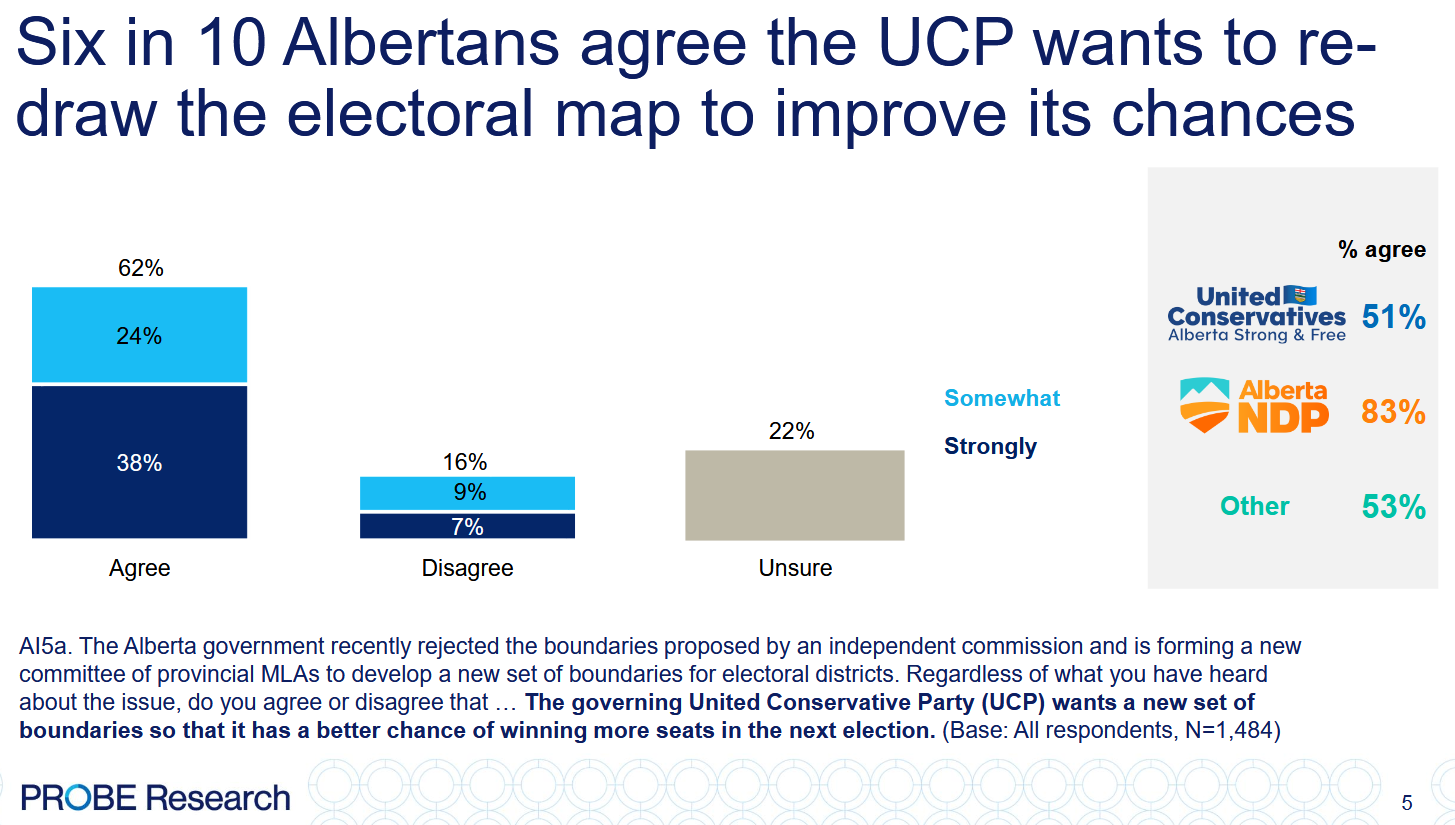
A majority of Albertans believe the UCP wants the new set of boundaries so it has a better chance of winning the next election.
That view, not surprisingly, is particularly prevalent among NDP voters.
But even among Albertans who intend to vote for the UCP, roughly half shared this cynical view of the government’s motivation.
The types of “hybrid” ridings that had been proposed in the commission’s minority report are also unpopular.
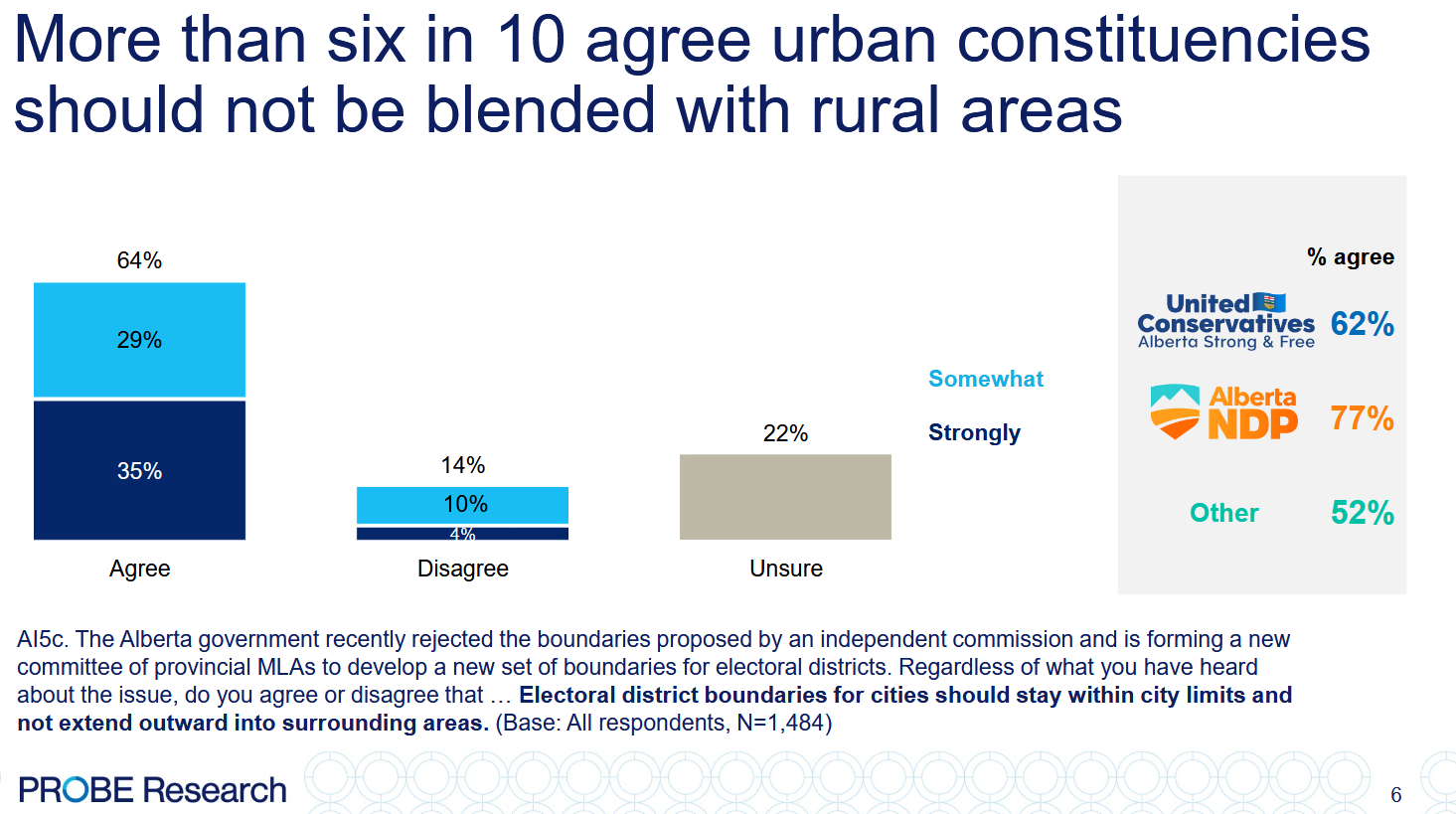
Nearly two-thirds of Albertans believe a city’s electoral boundaries should remain within city limits and not extend outward into surrounding areas.
That includes roughly six in 10 UCP voters and more than three-quarters of NDP voters.
This level of agreement across partisan lines is notable, given Alberta's typically sharp political divisions.
And in the final question we asked in this series, we found the highest degree of cross-partisan agreement.
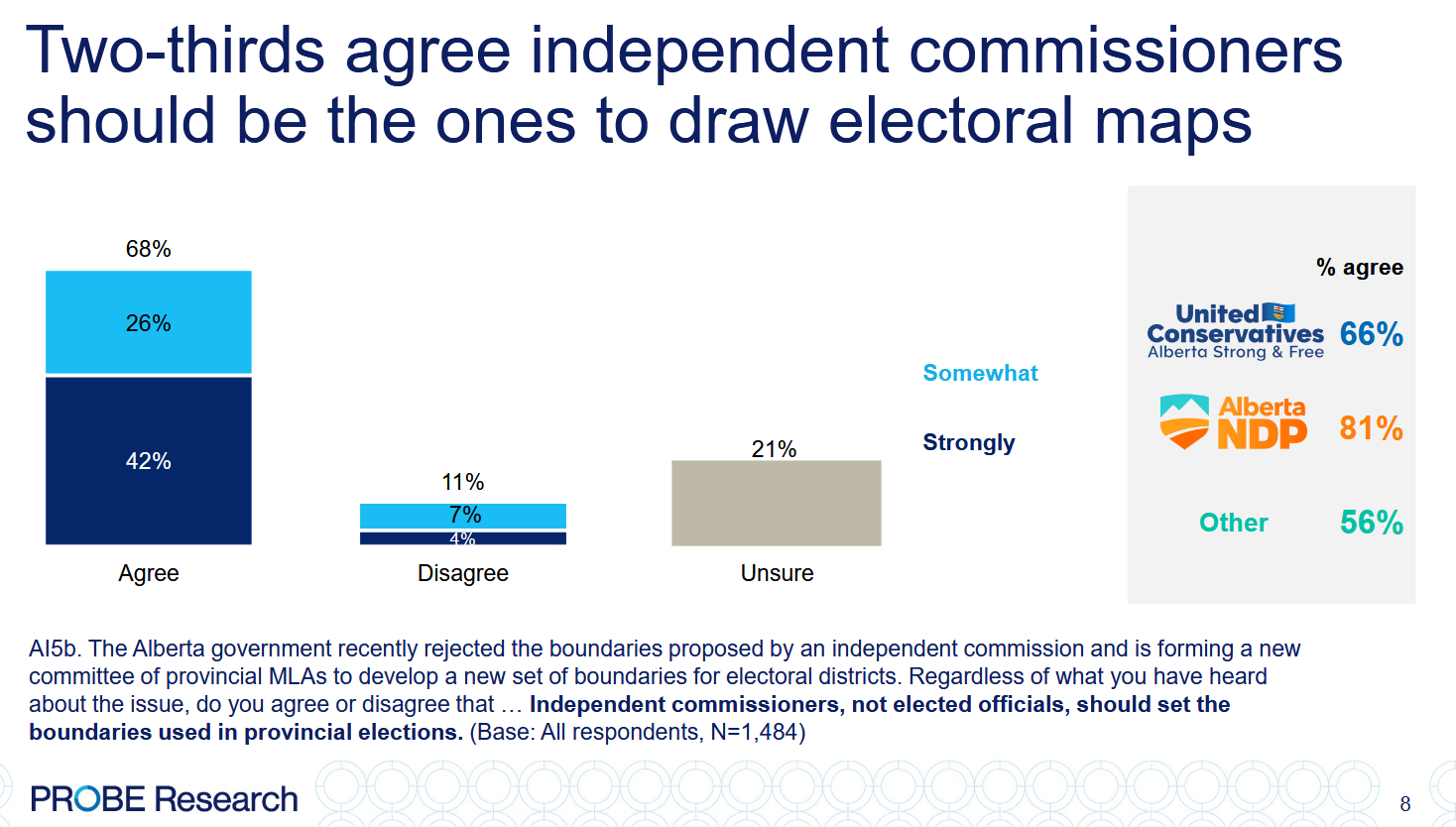
When it comes to who should be in charge of redrawing electoral boundaries, 68% of Albertans agree the process should be handled by independent commissioners and not elected officials.
That compares to just 11% of Albertans who feel it should be the other way around. (And 21% who were unsure.)
Strong majorities of both UCP voters (66%) and NDP voters (81%) want to see independent commissioners in charge.
“Other” voters — which, here, includes people who intend to vote for other parties, who are undecided, or say they won’t vote — were more likely to be unsure. But even among this group, a slim majority (56%) agreed independent commissioners are preferable to elected officials when it comes to electoral boundary decisions.
All in all, these results suggest Albertans are paying attention to a process that typically flies under the radar, suspicious of the government’s motivation, and uncomfortable with politicans redrawing the province’s election maps.
For the full results, methodology and data tables, see the report on the Probe Research website.
